


Cover crop-based under-row dry mulching enhances phyllosphere and rhizosphere microbial biodiversity in a non-irrigated vineyard
Canavera et al. (2026, Environmental Microbiome), Piacenza (Italy), found that cover crop–derived under-vine mulching in a non-irrigated vineyard significantly increased rhizosphere and phyllosphere microbial diversity while improving soil conditions and reducing pathogen pressure.
Headline Findings:
- Increases microbial diversity in soil and plant-associated communities
- Shifts microbial community composition toward a more complex, balanced ecosystem
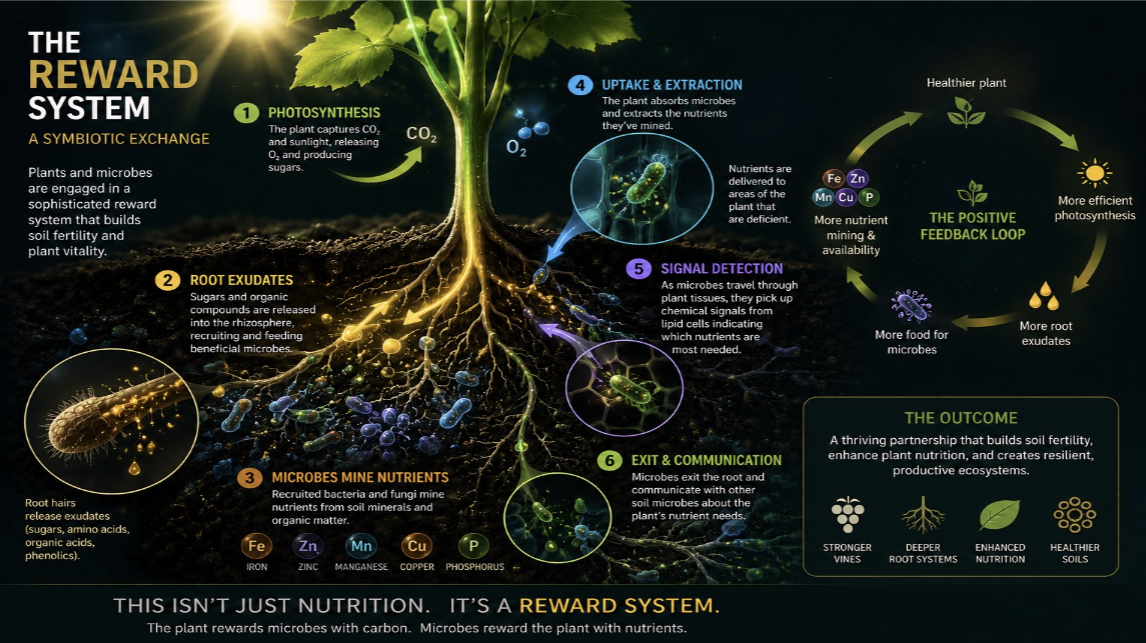
- Improves soil–plant microbial interactions, indicating healthier soil conditions
Methods:
Conducted in a non-irrigated vineyard in northern Italy.
Compared three inter-row management systems:
- cereal-based cover crop
- mixed cover crop (cereals + legumes + brassicas)
- control (grass/tillage management)
In spring, cover crops were terminated and left as dry mulch under vine rows (under-row mulching treatment).
Sampled both:
- Rhizosphere soil (root-associated soil)
- Phyllosphere (grapevine leaf surfaces)
Used DNA-based microbial profiling (amplicon sequencing of marker genes) to characterize bacterial and fungal communities.
Compared microbial diversity and community structure across treatments using ecological and multivariate statistical analyses.
Results:
- Under-vine dry mulch from terminated cover crops increased bacterial and fungal diversity in both soil (rhizosphere) and grapevine leaves (phyllosphere) compared with the control.
- Microbial community composition shifted significantly, with mulch treatments supporting a more heterogeneous and interconnected microbiome.
- Soil–plant microbial linkages were strengthened, suggesting improved ecological connectivity between roots, soil, and foliage.
- Effects were most pronounced in the non-irrigated (water-limited) conditions, where mulch likely improved habitat stability and resource availability.
- Overall: cover crop–derived mulch led to richer, more structured, and potentially more resilient vineyard microbiomes.
Read the original study here.