


Perrier-Jouët’s cover crop trials in Champagne
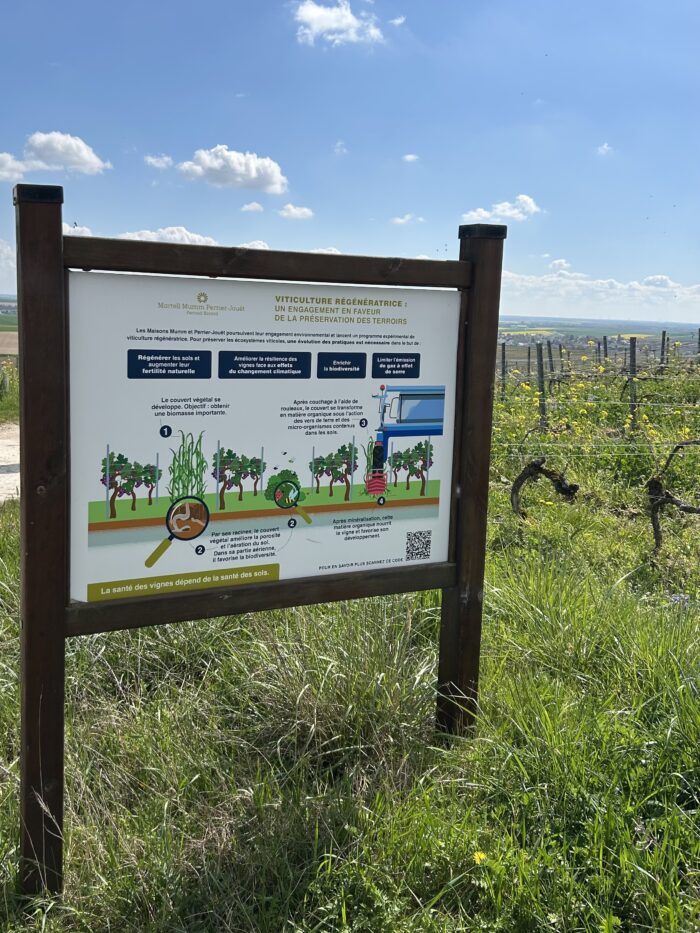
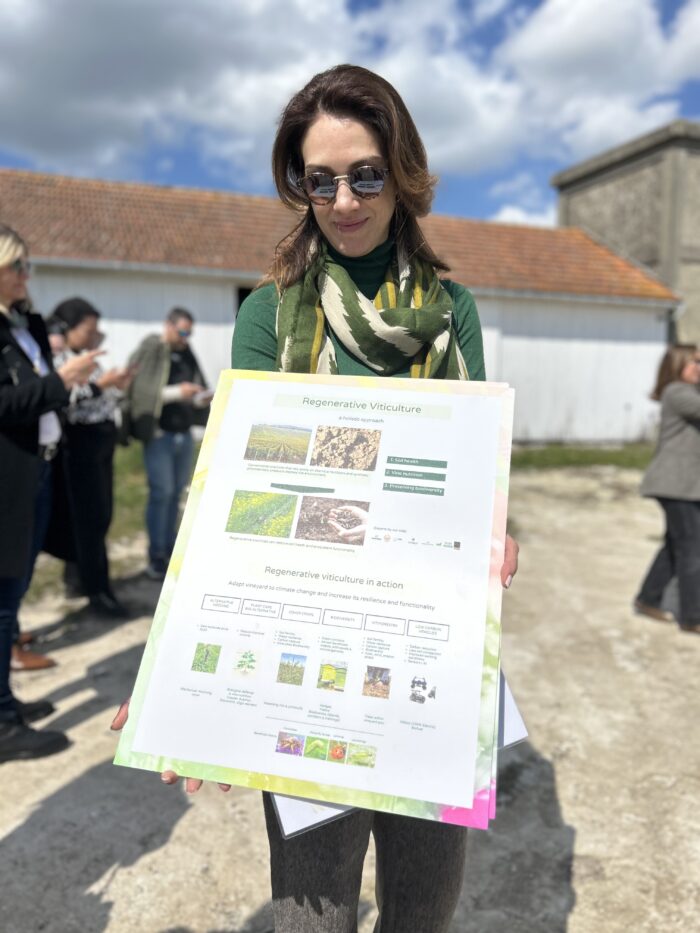
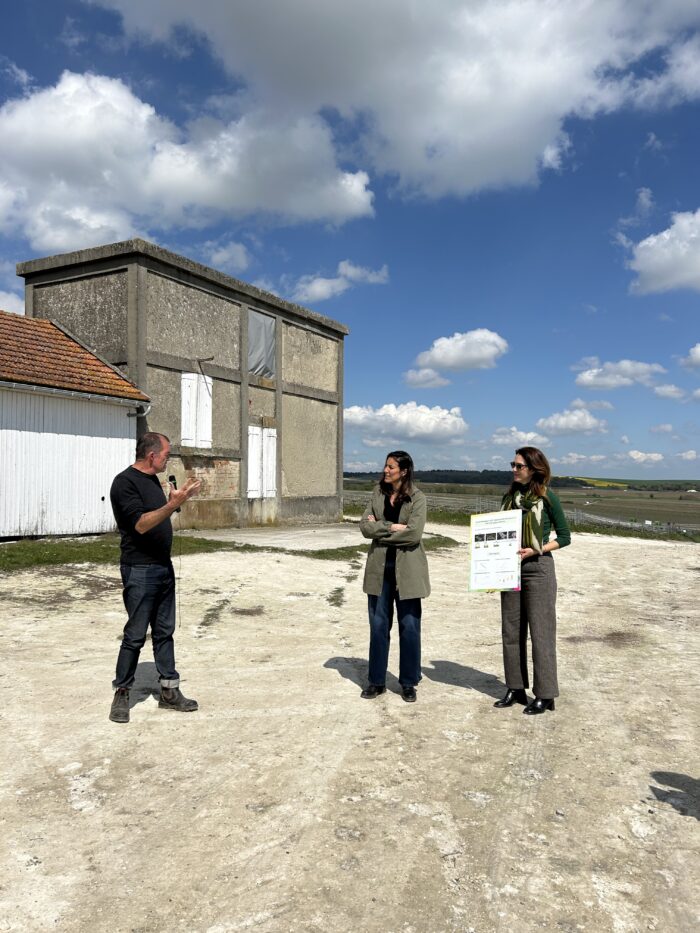
Perrier-Jouët are known for their links to nature, so it shouldn’t come as a surprise that they are committed to trialling regen. They are undertaking robust trials into different types of cover crops, the effect on the soil and – just as importantly – the effect on the wine. At the same time they are sharing knowledge and experience of regen farming in Champagne through their Pioneer club.
The Challenge
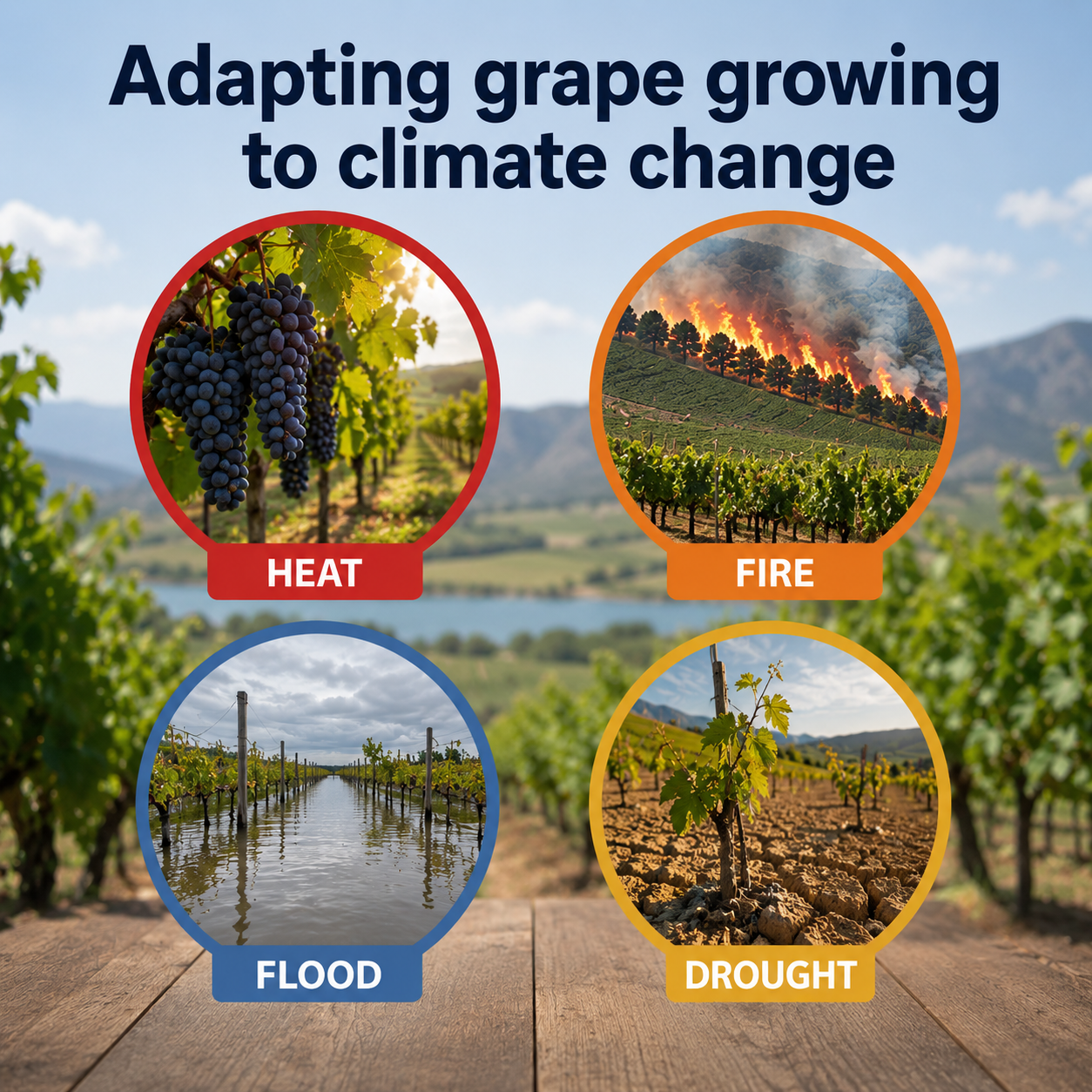
Climate change is tangible here, with earlier ripening, changing aromas and extreme frost, hail and rain. This is impacting yield and quality across Champagne. Herbicide use had deterioriated and compacted the soil, affecting plant fertility. Perrier-Jouët are investigating whether rebuilding soil health can build the vine’s resilience to climate shock, securing wine quality, while ensuring they continue to express the identity of their wines. The intention is to inspire their neighbours to try to the same, to build confidence that it is possible. Communication is very important, with local people and growers supplying grapes.
The Groundwork
Perrier-Jouët turned to experts on agroecological transition for guidance: the Centre National d’Agroécologie, Pour une Agriculture du Vivant, Biospheres and those from parent company Pernod Ricard. Together they did an initial audit to build an understanding of the soils, the nutrition of the vines and biodiversity at a landscape level. They then developed new protocols aimed at increasing resilience physically, chemically and biologically: definitions, metrics and a toolbox of practices. This includes zero herbicide and zero ‘CMR substances’ (Carcinogenic, Mutagenic and Reproductive Toxic Substances). They replaced these with cover crops, bioalternative solutions, biodiversity islands and corridors and agroforestry, attracting beneficial insects.
The regen trials
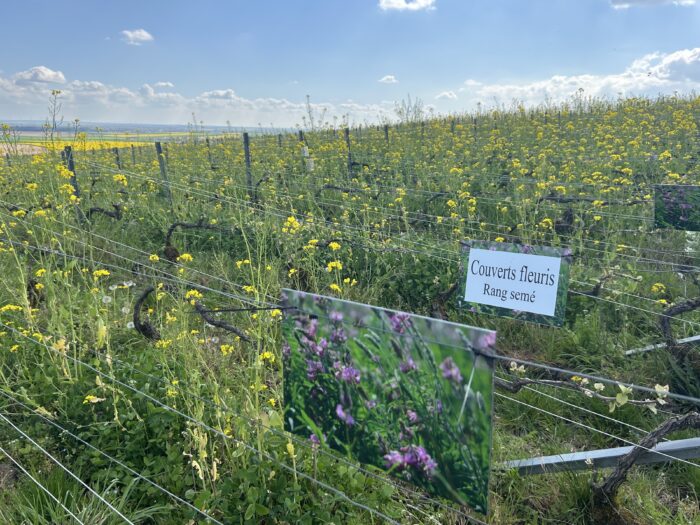
There are 4 experimental cover crop treatments that are being investigated in the vineyard, and followed through in the winery to see the impact on the grapes and therefore the wines. The cover crop seed mixes have been developed with local experts to ensure that only local species are being introduced, and that they are appropriate for honey bees.
- High biomass cover crops (legumes, clovers, mustards)
- Flowering cover crops
- Green manure cover crops (100% legumes and clovers) to fix Nitrogen
- Control (certified durable with no herbicides or CMR)
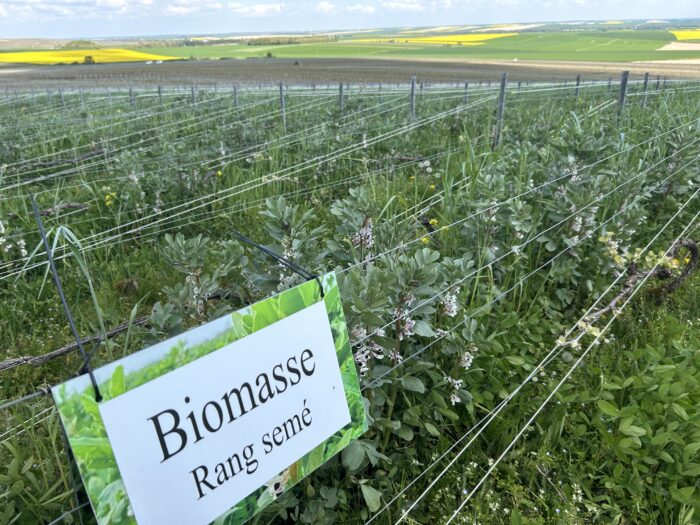
Sowing
Seeds have been sowed just before harvest, in alternate rows so that there is no traffic on the trial rows and they remain under the new protocol for multiple years. This provides the opportunity for the soils in the trial rows to transition.
Management
The cover crops will be allowed to grow very high, before being crimped to form a mulch. Under vine growth will be controlled by mowing.
Option to resow every 3-4 years if diversity of crops has reduced. However, this will be in the same rows.
Indicators
The Research and Development team has developed the indicators. Data includes yield, soil health, earthworms, competition for hydrogen and Nitrogen. Interns are sampling throughout the year. As there is a correlation between yields and Nitrogen, they are sampling N throughout the year.
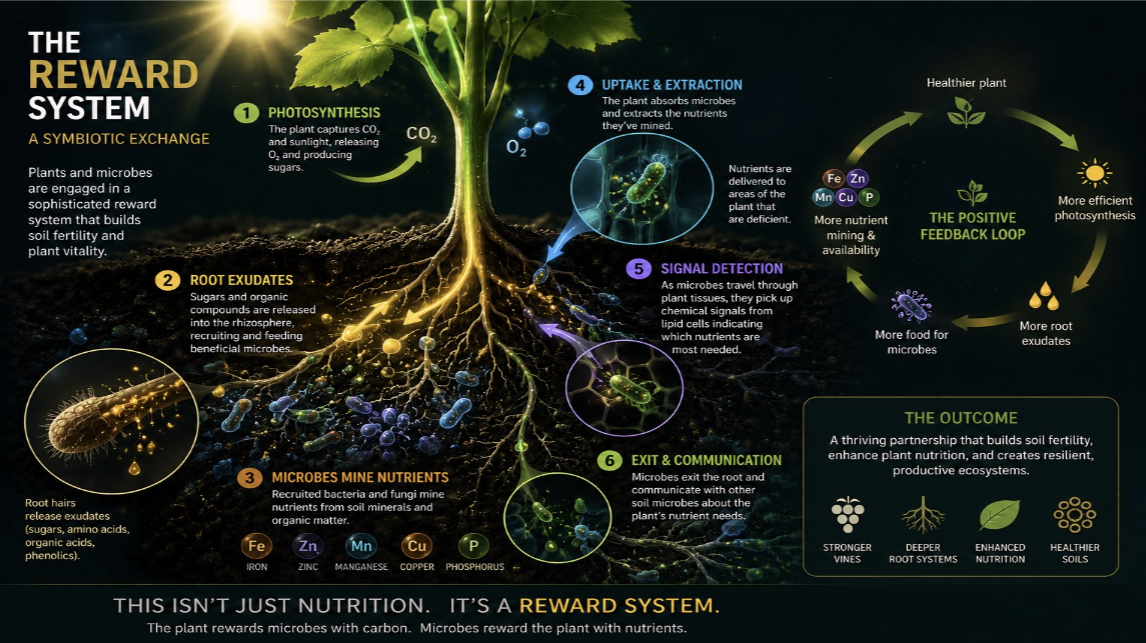
After 4 years there has been an improvement in biological fertility, creating more life underground in the soil, making more Nitrogen available to the plants. There are positive indicators for physical structure of the soil, chemical parameters, growth of vines, quality of harvest, earthworm count, gallery count.
- Reduction in compaction
- Increase in Nitrogen (seen in grapes and musts)
- Increase in earthworm galleries
- Increase in yield year on year. Not each individual year but as a general trend
They have not experienced increased problems with frost. The duration of frost events can be longer, but the temperatures are not lower.
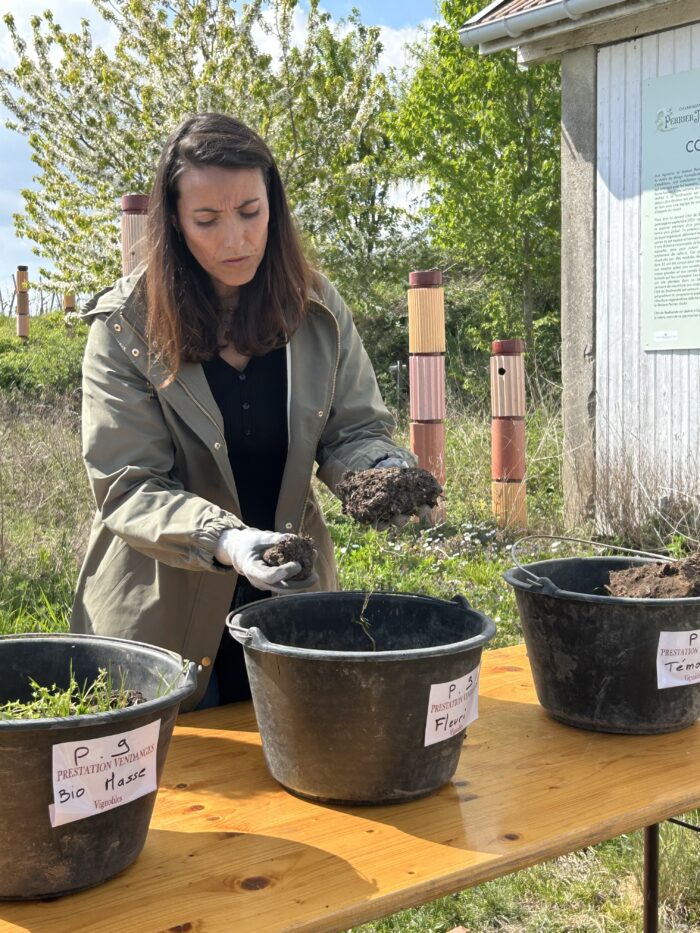
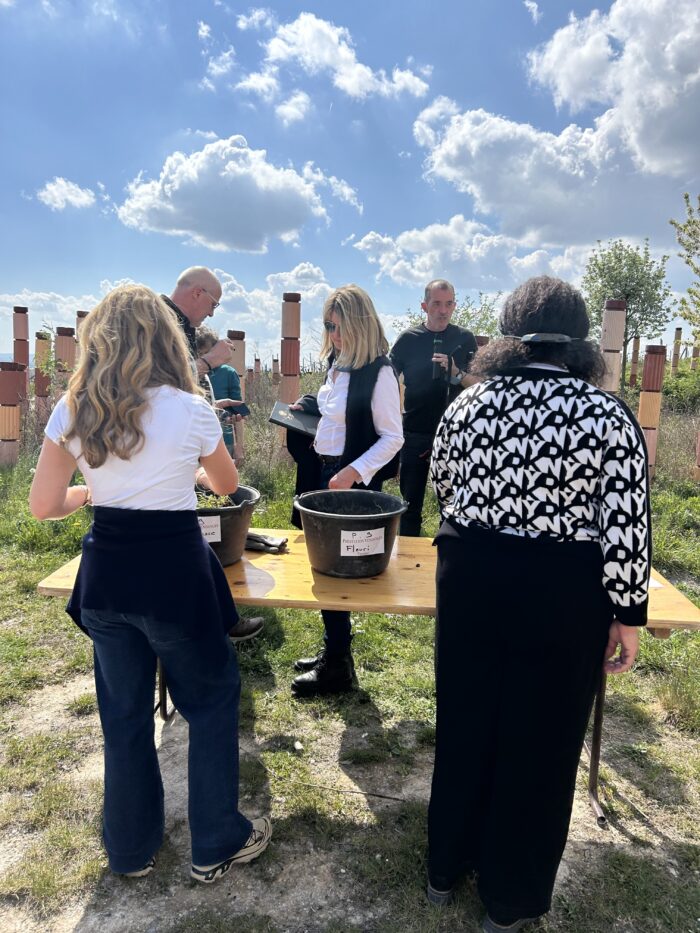
Community relations
In 2025 their pioneer club built awareness of regen practices with over 200 people, providing opportunities for networking, feedback and learning. Workshops have been hosted for growers to make up their own floral seed mixes for around the vines.
Collaborations with artists on their wildlife towers has provided biodiversity habitats, increasing biodiversity richness and abundance. They are also funding local biodiversity projects to create habitats including hedges, stone walls, wetland restoration, orchards and education to children on biodiversity.
Wine Quality
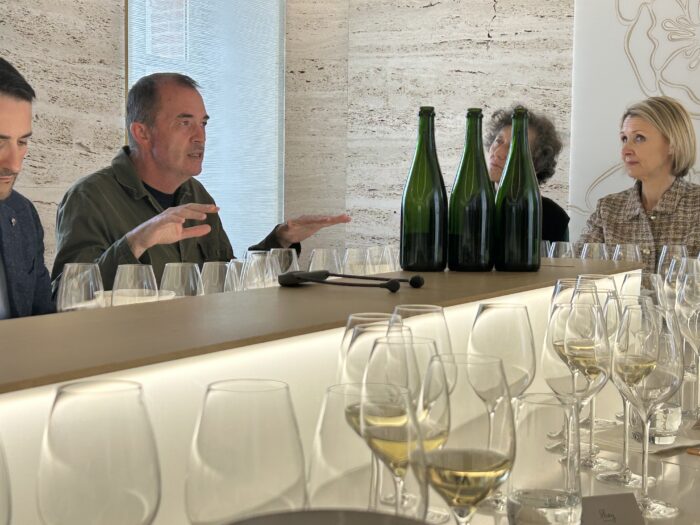
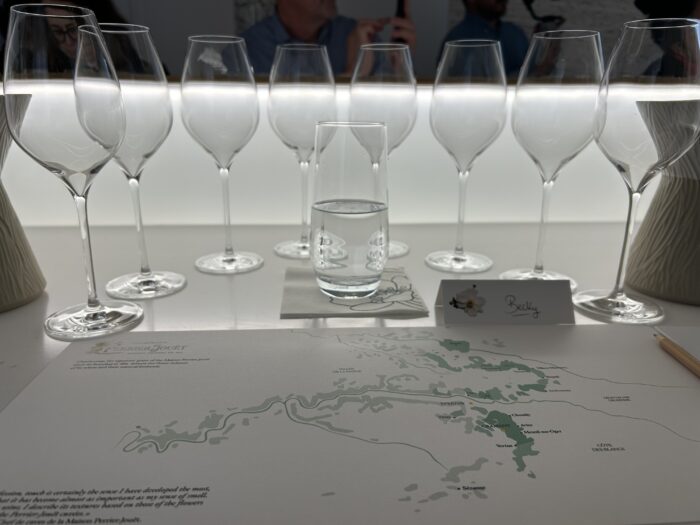
Most excitingly in the winery, the vins clairs base wines made from grapes from each of the plots. Incredible to genuinely be able to taste the difference between wine made from control, floral and biomass cover crops. Even more interesting to find out that early results are showing a slight reduction in alcohol in the trial plots. That’s seismic!
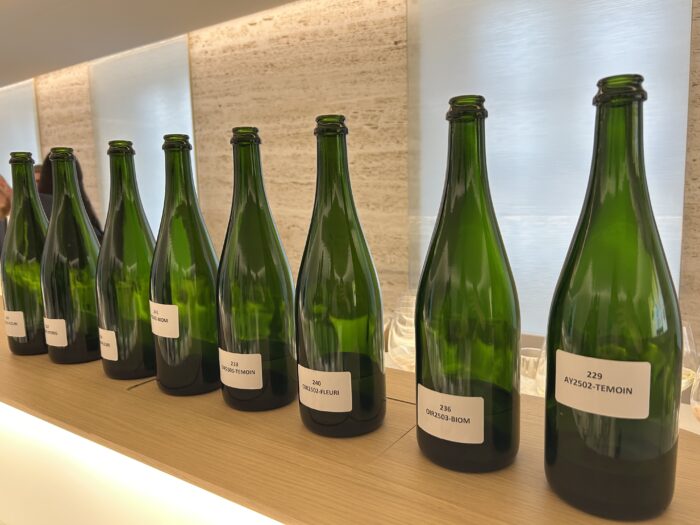
Regenerative Viticulture is clearly a huge focus for PJ and they are going about the trials in a robust way, intending to inspire their local growers to do the same. The plan is for 100% of their vines to be under cover crops by 2030.
Perrier-Jouet are undertaking robust trials into different types of cover crops, the effect on the soil and – just as importantly – the effect on the wine.