


Adapting and Building Resilience to Wildfires
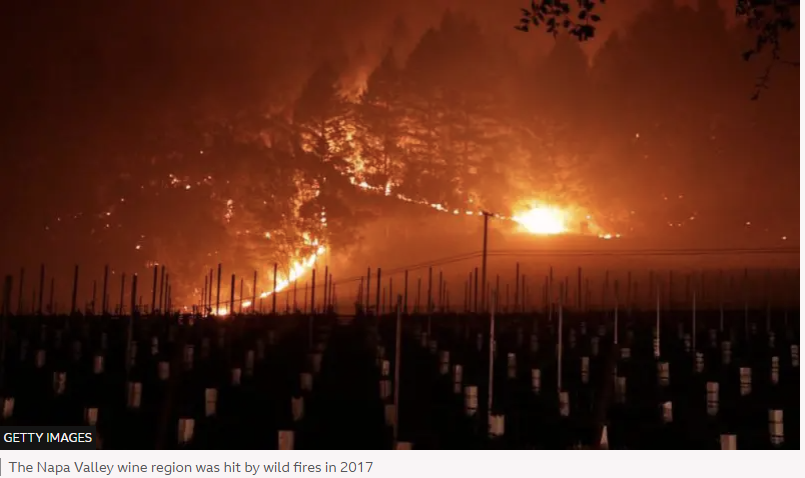
More frequent droughts and heatwaves are driving an increase in wildfires, which damage vines and reduce yields through burning and smoke taint.
Many regions have recently suffered from wildfires, including Australia and South Africa experiencing devastating fires in 2026. In 2020 two million hectares of forest was lost in California.
So why are we getting more fires and how can regenerative viticulture build resilience?
One of the causes is a lack of moisture in the soil, caused by tile drainage in vineyards designed to remove rainwater as rapidly as possible, a lack of organic matter in the soil (1% of soil organic matter can store up to 20,000 gallons of water per acre at a depth of one foot), and the removal of groundwater for other uses.
Paradoxically, increasing frequency and level of floods can lead to droughts and wildfires. Extreme precipitation events can wash away topsoil and leave the landscape with dying or stressed vegetation that ignites more easily and less able to retain moisture afterwards and therefore more vulnerable to drought stress. The loss of organic matter reduces water infiltration into the soil and down into aquifers below.
“With less water infiltrating underground, less water will slowly seep out over the ensuing months, to keep rivers running, and to keep the soil and vegetation moist into the dry season. With less hydration, the land becomes more susceptible to wildfires. Enhancing the ability of landscapes to retain rainwater is a solution which addresses all of the types of disasters.”
alpha lo, climate water project
If landscapes can retain more water, then it will become more hydrated into dry season, which will then lead to less wildfires.
There are many ways to retain more water in the landscape. Regenerative techniques include:
Improving soil health
This retains moisture in the soil and allows water to filter down into aquifers. Healthy soil functions as a water reservoir, buffering vines during prolonged dry periods. Minimising soil disturbance and adding organic soil amendments help build soil health. Increasing organic matter directly increases the soil’s ability to store more water.
Why it works:
- Each additional 1% of soil organic matter enables the soil to store 20,000 gallons at 1 foot depth per acre (this varies according to soil type and initial conditions)
- Increasing soil sponginess can decrease flood strength, in turn decreasing fire risk
More information can be found here.
Low combustible ground covers
Keeping the ground covered with living roots helps water filter into the soil. It also stops the cycle of flood-drought-fire. However, it is important to select low combustible plants which, when they catch fire, can be put out with a boot. More information can be found here.
Regenerative hydrology
In many conventional vineyards, excess rainwater is removed as quickly as possible through tile drainage systems, and vine rows are often planted straight down slopes. This design accelerates the downhill movement of water, which frequently carries away valuable topsoil and nutrients with it. With climate change bringing more intense rain and longer dry periods, these systems are poorly suited to today’s conditions. Regenerative hydrology redesigns the vineyard to slow and store water in the landscape, improving infiltration, reducing erosion, and providing greater resilience to both floods and drought.
Q. “How much rain did you get this growing season?”
a grower’s comment on ensuring every drop of rainfall was stored for when it was needed
A. Every last drop
Information can be found here with examples of producers trialling regenerative hydrology. This includes the use of ponds, swales, check dams, redents and planting vineyards along contours instead of down slopes. These earthworks slow or catch water, so it then sinks more easily underground where it usually travels at a much slower rate. This means it can still be seeping out to keep rivers flowing, and landscapes hydrated into the dry season. If enough water seeps underground to create shallow water tables, plants can use capillary action to draw up that water from the ground table.
Landscape scale management
Improving community or watershed management of water is increasingly being seen as a core solution to build resilience to the new patterns of extreme drought followed by extreme rain. Enhancing the ability of landscapes to retain rainwater is a solution which addresses floods, droughts and fires.
If landscapes can retain more water, then they will become more hydrated through the dry season, which will then lead to less wildfires. And if landscapes can absorb more water when it rains uphill, then the volume and velocity of floods will be less at lower elevations.
Restoring floodplains can absorb floodwaters: one acre of wetland can hold one million gallons of water during floods. Wetlands can release water slowly so that the landscape can be more hydrated into dry seasons. Wetlands also are a way to fill up aquifers and to raise the water table. Wetlands can also increase the humidity, and lower temperatures. This lead to winds which are less dry and hot, winds that are less likely to fan wildfires. Wetlands are also natural firebreaks.
Other adaptations
- Tree protection (e.g. barriers of cork or olive trees)
- Neighbouring woodland managed for fire risk (e.g. grazing animals, collecting fallen wood for biochar)
This is part of a series of resources on Climate Change Adaptation. The following buttons will take you to other resources.
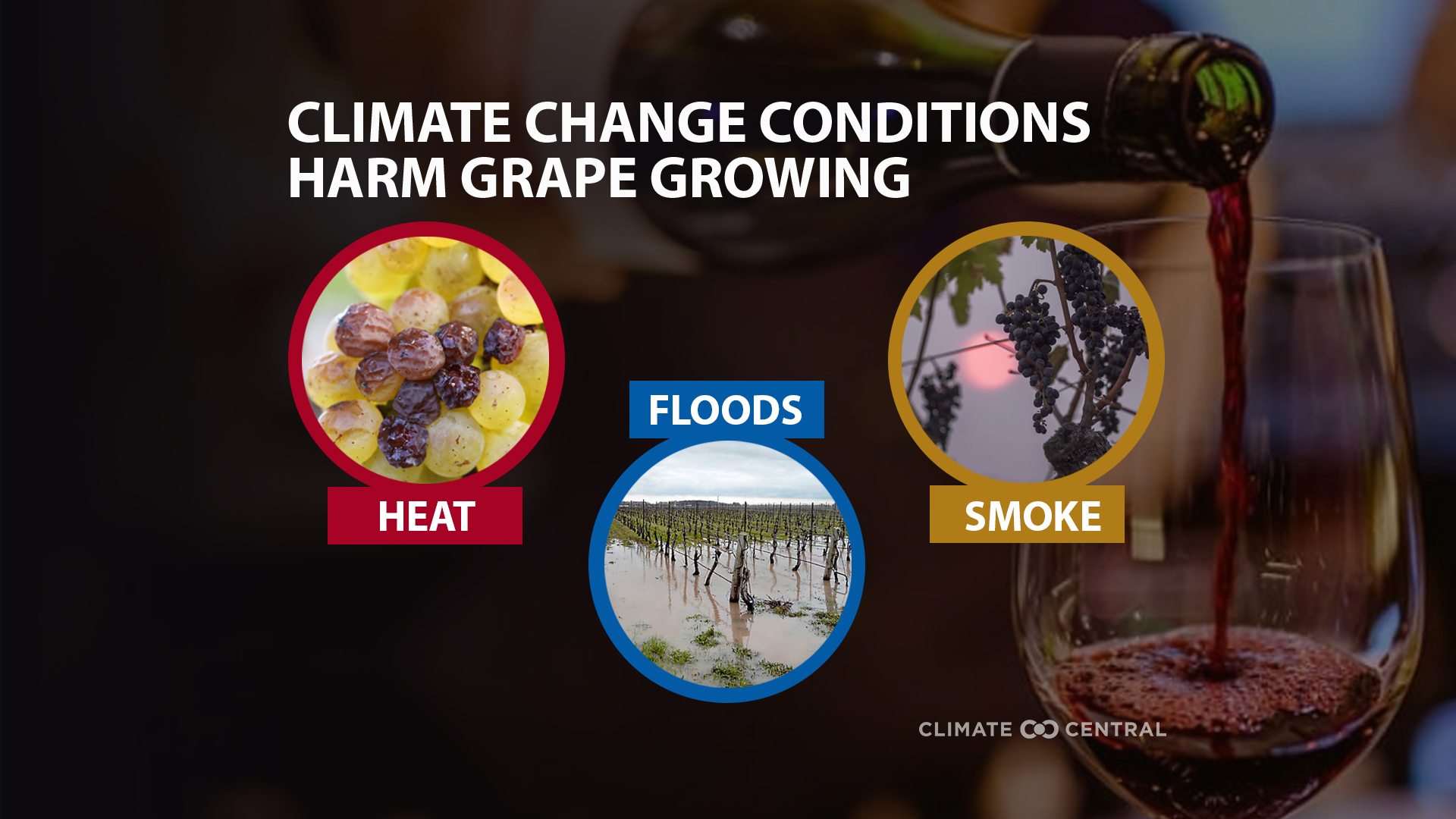
Climate extremes of heat, drought and floods are the new normal. How can regenerative practices help viticulturists adapt to climate change.