


Adapting and Building Resilience to Extreme Rainfall
Climate change is leading to an increase in extreme precipitation events. Warmer air temperatures mean that the air can hold more moisture. Therefore, when it does rain, there is an increase in frequency and extent of flooding. The pattern of rainfall has also changed. Many traditional wine regions would not expect rainfall during the growing season. This is now not uncommon. On sloping vineyards with bare soils flooding causes soil erosion and damage to vines. Depending on the time of year, unusual rain patterns can result in an inability to access the vineyard with machinery, poor flowering and fruit set, increased disease pressure, grape dilution and crop loss.
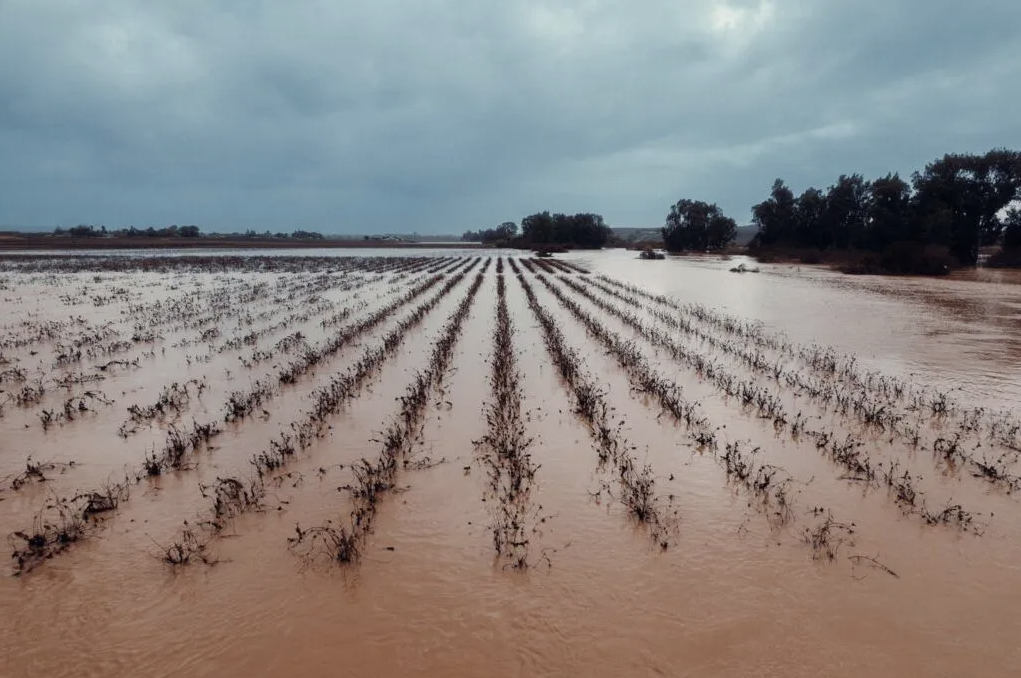
Regenerative viticulture techniques can be very successful in building resilience to extreme precipitation events:
Improving soil health
Improving soil health enables water to filter into the soil. Minimising soil disturbance and adding organic soil amendments help build soil health. Increasing organic matter directly increases the soil’s ability to store more water.
Why it works:
- Each additional 1% of soil organic matter enables the soil to store 20,000 gallons at 1 foot depth per acre (this varies according to soil type and initial conditions)
- Increasing soil sponginess can decrease flood strength
More information can be found here.
Integrating animals
Using animals to graze the ground cover reduces compaction compared to controlling ground cover with tractors. This allows water to infiltrate the soil in extreme precipitation events, rather than running off. Animals have also been shown to accelerate the regeneration of vineyard soils.
Why it works:
- Heavy vineyard machinery used to mow/plough/strim to control weeds compact the soils, stopping water from filtering in so easily
- Animals do not cause as much compaction
- In addition, animals’ hooves create little depressions in the soil which fill up with water
More information can be found here.
Multi-species / multi rootzone depth ground covers
Incorporating multiple species of plants from multiple plant families creates ground cover composed of many different rooting depths. This facilitates water infiltration and creates air pockets in the soil, reducing compaction. In wet springs, this will enable vineyard managers to access the vineyard for first management.
Why it works:
- Water can infiltrate the soil more easily than if the vineyard floor is bare or there are only short rooted grasses etc.
More information can be found here.
Planting trees/agroforestry/vitiforestry
Planting trees increases the infiltration of water deep down in the soil.
Why it works:
- The large size of trees enable more water to be taken down into the soil
More information can be found here.
Regenerative hydrology
Regenerative hydrology redesigns the vineyard to slow and store water in the landscape, improving infiltration, reducing erosion, and providing greater resilience to both floods and drought. This includes the use of ponds, swales, check dams, redents and planting vineyards along contours instead of down slopes. These earthworks slow or catch water, so it then sinks more easily underground where it usually travels at a much slower rate.
Why it works:
- Slows down the flow of water, reducing soil erosion, improving soil’s water holding capacity
- Allows water to filter down into the ground, further slowing the passage of water and increasing water in aquifers and/or creating shallow water tables
More information can be found here.
Improved upstream watershed management
Improving community or watershed management of water is increasingly being seen as a core solution to build resilience to the new patterns of extreme drought followed by extreme rain. Enhancing the ability of landscapes to retain rainwater is a solution which addresses floods, droughts and fires.
If landscapes can retain more water, then they will become more hydrated through the dry season, which will then lead to less wildfires. And if landscapes can absorb more water when it rains uphill, then the volume and velocity of floods will be less at lower elevations.
Restoring floodplains can absorb floodwaters: one acre of wetland can hold one million gallons of water during floods. Wetlands can release water slowly so that the landscape can be more hydrated into dry seasons. Wetlands also are a way to fill up aquifers and to raise the water table. Wetlands can also increase the humidity, and lower temperatures. This lead to winds which are less dry and hot, winds that are thus less likely to fan wildfires. Wetlands are also natural firebreaks.
Natural pest predators and insectary plants
Climate change is bringing with it an associated change in pest pressures as they are moving into regions that were not previously suitable. Conventional farming often has high areas of monoculture, with no habitats for natural predators. When an infestation occurs, there is nothing to keep it in check and it can only be controlled through application of insecticides. Regenerative farming places a high emphasis on increasing biodiversity both above and below ground to restore ecosystem balance. Instead of routinely using insecticides, beneficial predators are encouraged through provision of suitable habitats through insectary plantings. The areas of vineyards that are not planted to vines are often suitable for planting as they can be left undisturbed.
Why it works:
- A balanced ecosystem can provide natural predators to keep the pests under control
- Planted up margins are not disturbed to facilitate working in vineyard rows
More information can be found here and here.
This is part of a series of resources on Climate Change Adaptation. The following buttons will take you to other resources.
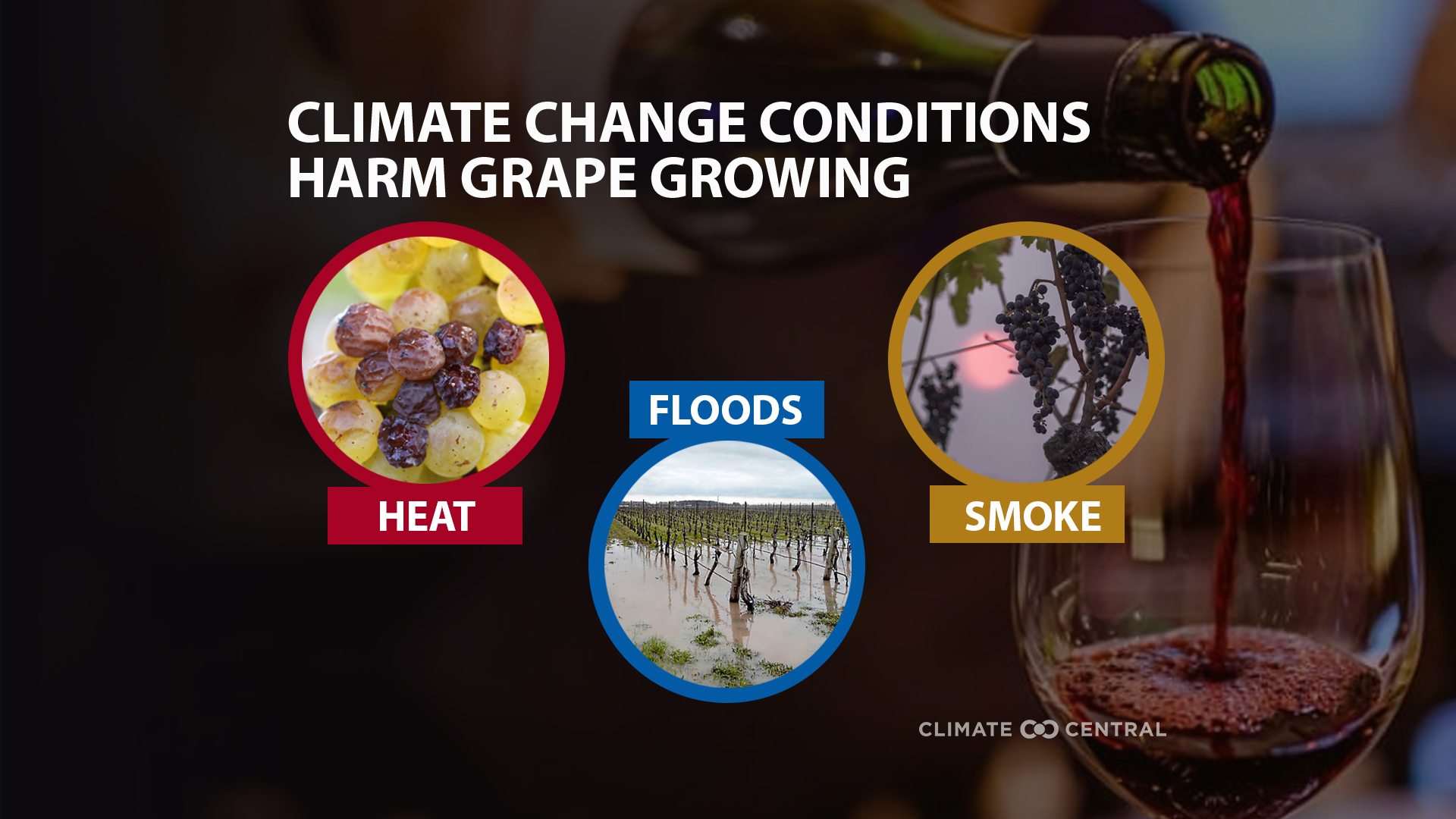
Climate extremes of heat, drought and floods are the new normal. How can regenerative practices help viticulturists adapt to climate change.