


New study into the long-term impacts of regenerative management on vineyard soil health
Interesting new study from Cristina Lazcano’s team at UC Davis, analysing the effect of long-term use of cover cropping, compost, no-till, and grazing across different vineyard conditions.
Headline findings
- Long-term regenerative management can enhance soil health, but outcomes depend on soil texture, climate, and specific practice combinations
- Long-term cover cropping was the most consistently influential, even more so when combined with other long-term practices like compost and grazing
- 10+ years of continuous practice adoption is often needed to achieve meaningful soil health improvements
- Livestock can ‘jumpstart soil biological activity and carbon cycling’, accelerating soil health gains (6 years grazing improves soil health even in the absence of long-term cover crops)
- ‘Stacking’ practices depends less on the number of practices adopted and more on the specific combinations and their alignment with site-specific environmental conditions. Not all combinations are equal. Context is king
- Surprisingly, no-till exhibited mixed results and limited impact but this might be due to to the research model used. Would benefit from further context-specific evaluation
Method
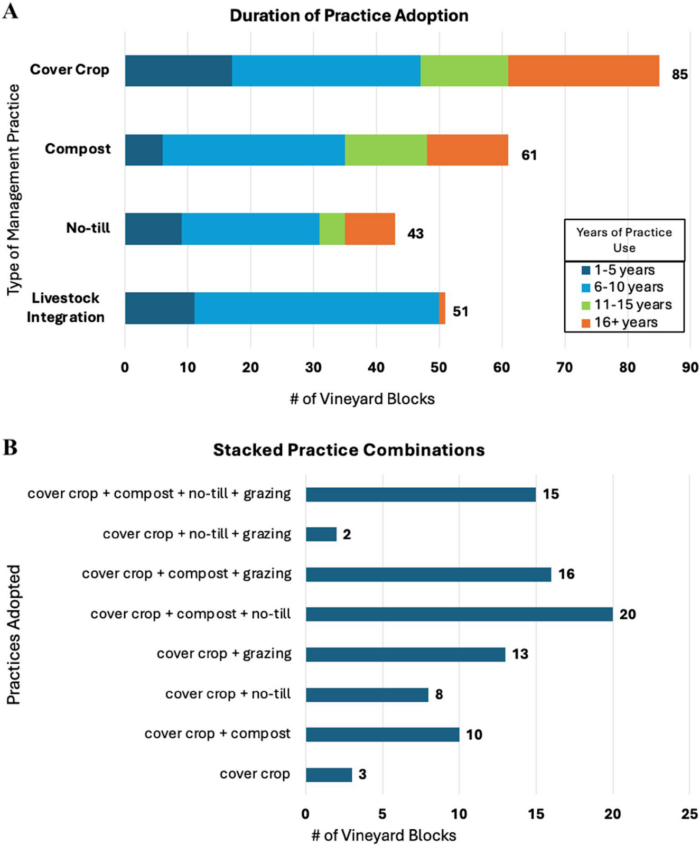
12 growers provided samples from 87 vineyard blocks, with 2 samples from each (one in the alley and one undervine)
Region and vineyard specific soil health indicators were developed to include physical (aggregate stability), chemical (soil organic carbon) and biological (mineralisable carbon, i.e. soil respiration).
Comparison of:
- Long-term RV (5+ years) vs non-RV (10+ years) management
- Combined regen practices (cover crops, compost, livestock, no-till). Also data on irrigation, fertility inputs and management goals
- Analysed by mixed models taking into account soil, rainfall and temperatures
Limitations:
- Only one year’s data but across sites with different histories
- Model for stacking practices possibly over-simplified
Results
Stacking:
- Importance of tailoring management strategies to soil texture, precipitation, and temperature patterns rather than simply adopting as many regenerative practices as possible.
- For researchers and certification bodies, it raises important questions about how to meaningfully assess ‘regenerativeness’ in ways that prioritise functional outcomes over checklist-style metrics
Different contexts:
- No-till was effective in warm, wet climates… biomass production increases in relatively warm and wet environments (and therefore needs managing)
- Importance of long-term cover cropping in cool, wet climates, where milder winter temperatures extend the growing season
- High temperature (> 23°C) was a common condition for improved physical and biological properties
Improved physical qualities frequently required stacking multiple long-term practices, in contrast to SOC, where high scores were often achieved with fewer practices. This suggests that SOC may respond to a broader range of management pathways or accumulate quicker under specific conditions, while building soil structure may take more time and effort.
No-till was not a dominant driver of soil structure improvements. Instead, it was more frequently associated with long-term cover cropping, particularly when stacked with compost and, in some cases, grazing under warm conditions.
The authors also identified potential benefits from the management of alley rows expanding into the under-vine area.
The link to the paper: https://doi.org/10.1111/ejss.70207 It’s behind a paywall so please email us if you would like us to share the pdf with you.
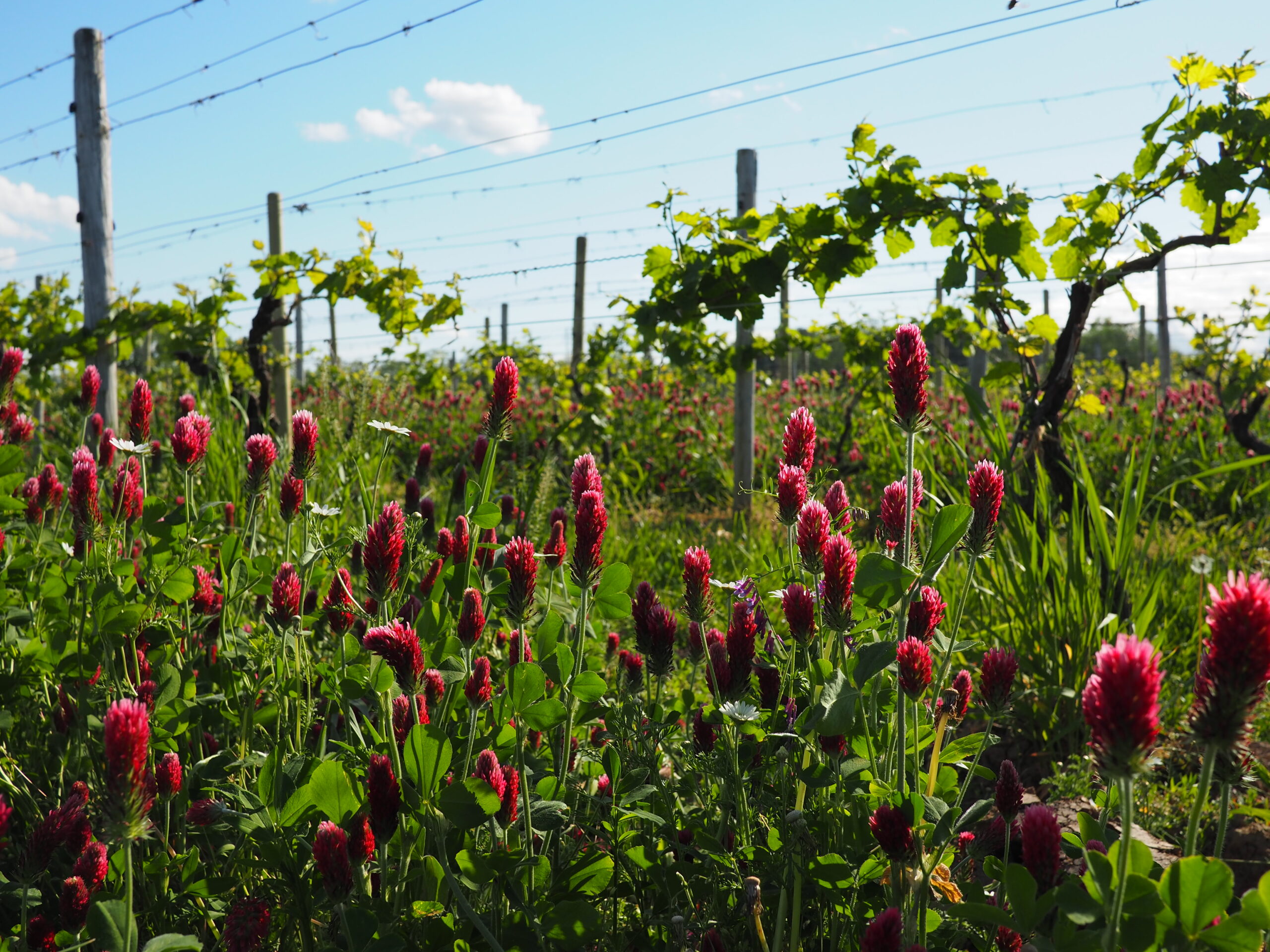
2025 study from Picone et al on 87 Californian vineyard blocks
10+ years cover cropping consistently beneficial, particularly when paired with additional practices.
Stacking compost with cover crops contributes notably to improved outcomes.
Grazing jumpstarts improved soil health
No-till impact mixed and context-dependent