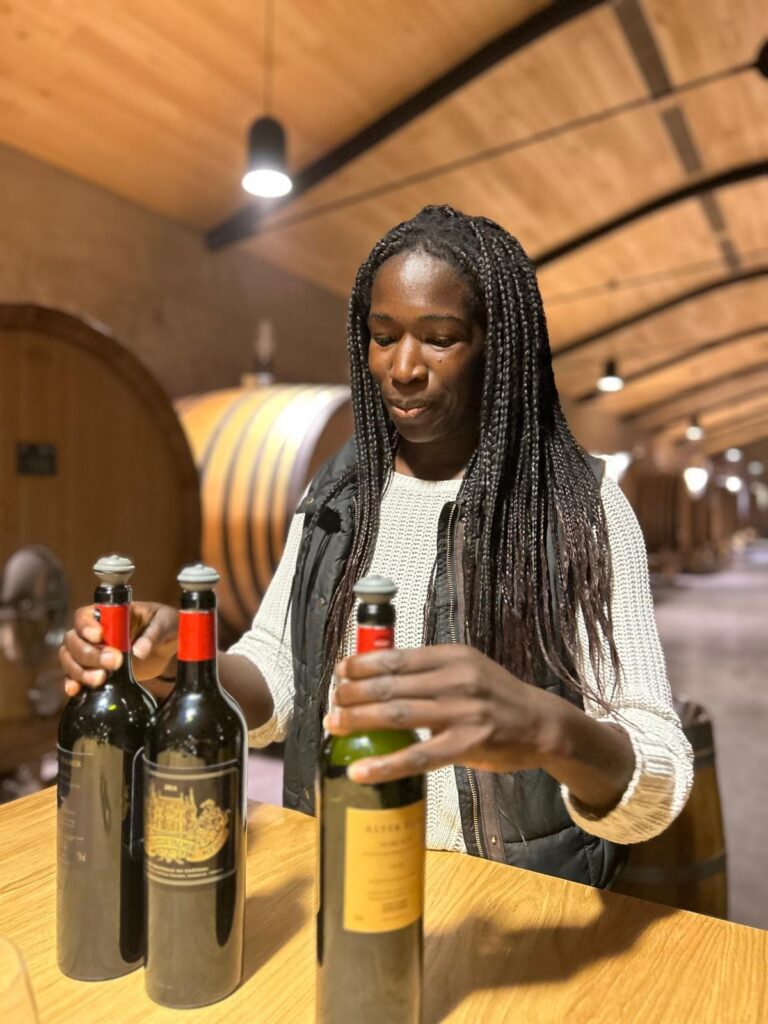
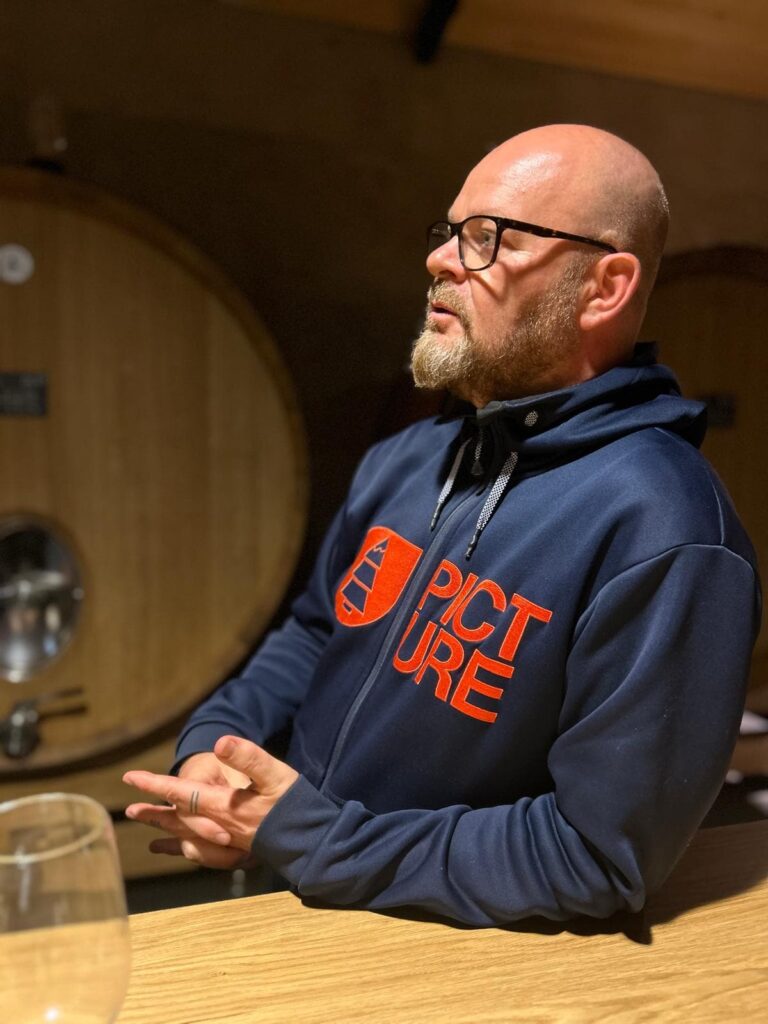
Organic and biodynamic certified Chateau Palmer in Margaux is serious about regen. Not just as it relates to the farming of grapes but also across the entire business. They have developed a regenerative strategic vision in collaboration with all their staff, from vineyard workers all the way up to senior management. We had the good fortune to spend an afternoon with both their consultant Charlie Felgate and their brand new Director of Regenerative Development Laura Esperandieu.
It soon became clear that a huge emphasis is being placed on staff wellbeing. And we must say, everyone we met seemed to have a huge smile on their face.
Polyculture
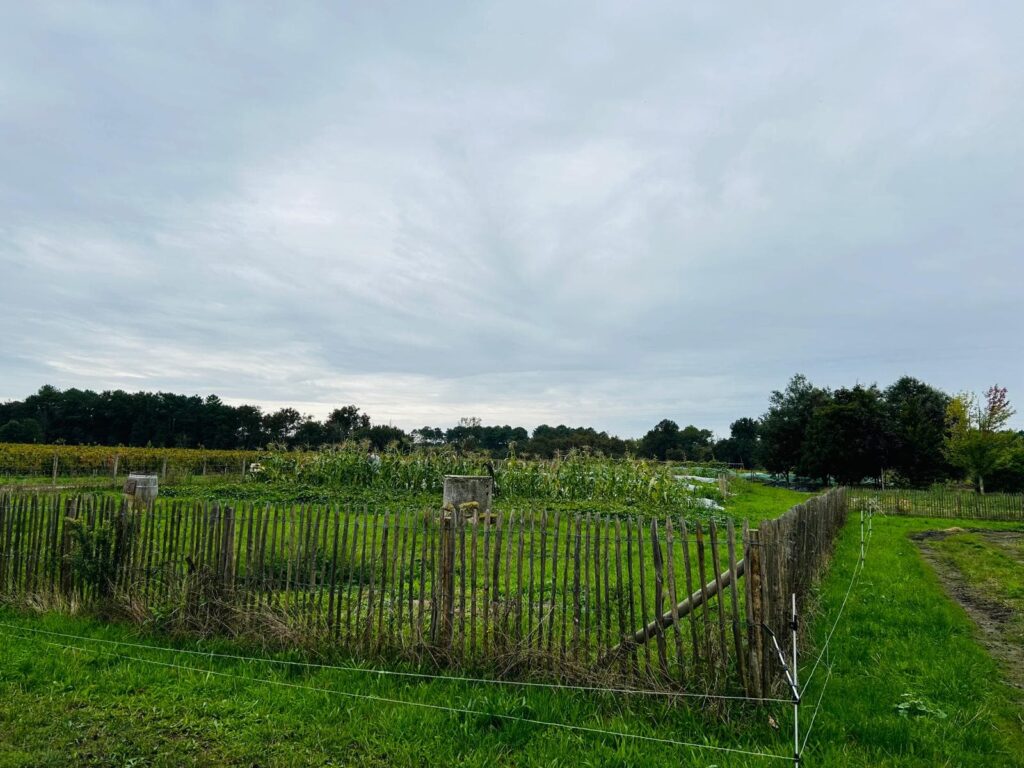
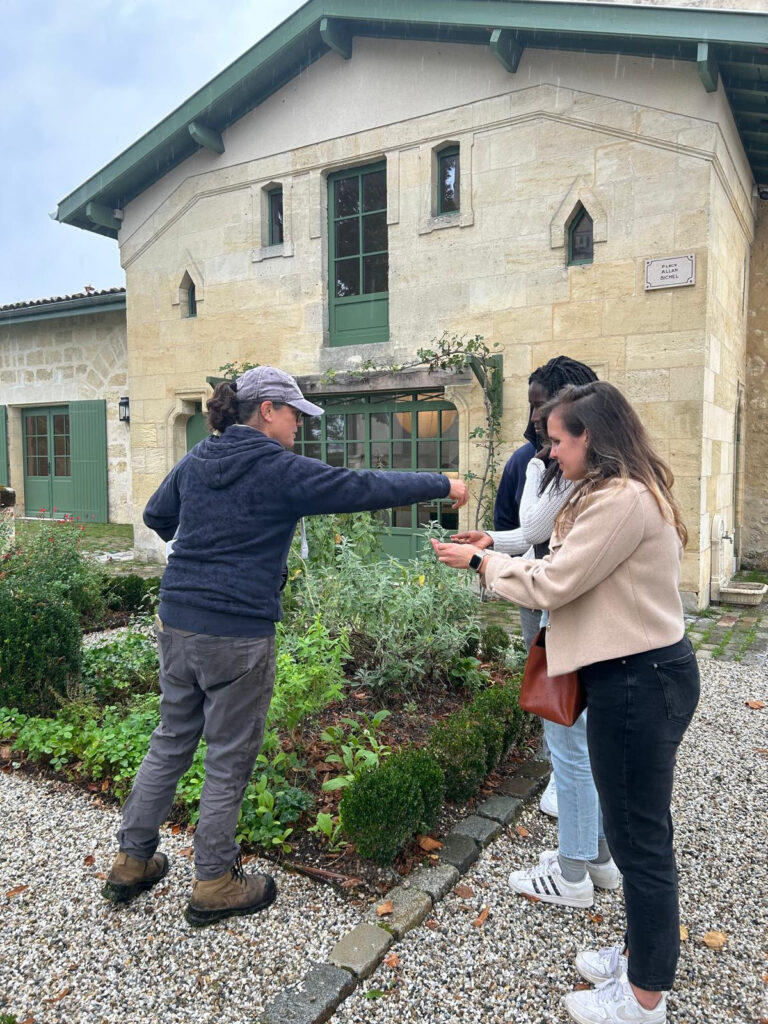
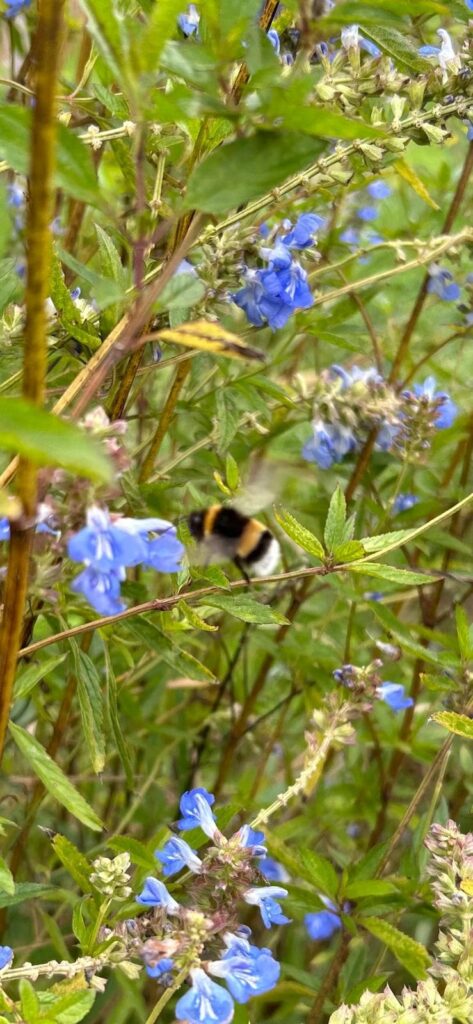
Part of that might be that they have just built a lovely canteen for everyone to eat in together, dining on food grown and reared on the estate. Land has been converted to market gardens, full of buzzing bees, even at the end of September. They are tended by the extremely knowledgeable and enthusiastic Vivienne who plied us with tasty morsels freshly plucked off plants, including rocket flowers (rucola to many of you). We also chatted to the passionate chef Coco while he was making his daily rounds selecting ingredients for the day’s menu. Make no mistake, this isn’t any old land they have converted to market gardens, this is rather valuable Marguax appellation land!
We haven’t even got round to talking about growing grapes yet. This is indicative of the importance Chateau Palmer places on diversification and polycultures.
Animals in the vines
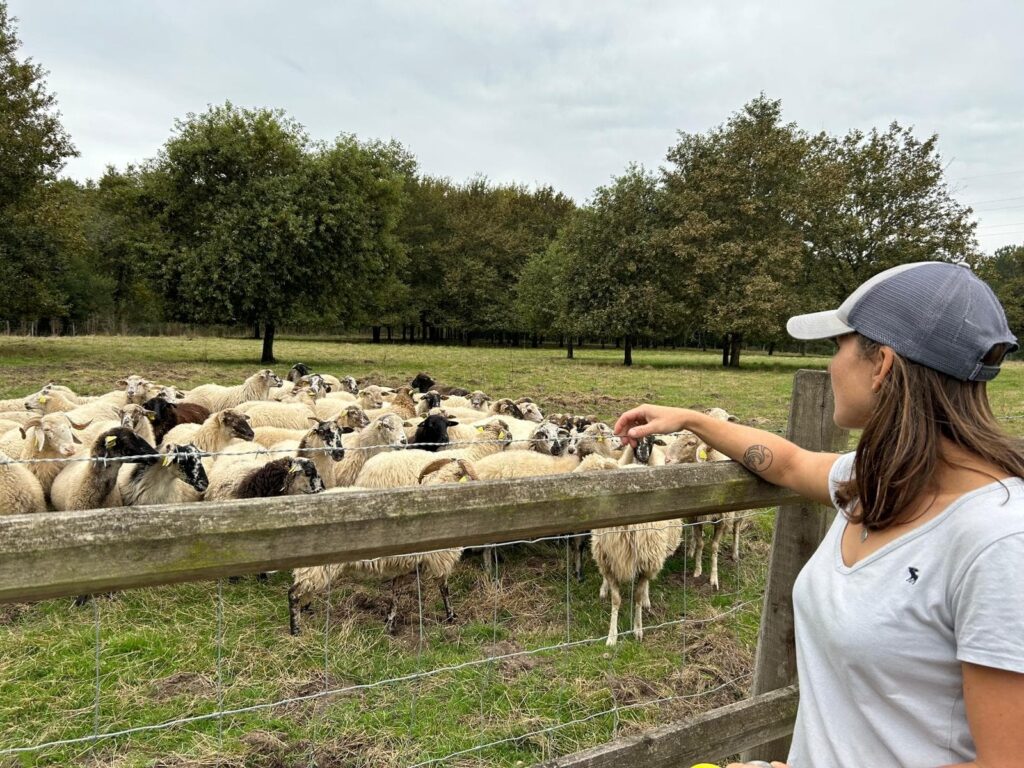
Part of this diversification involves animals, with cows, sheep and a horse tended by the uber-cool Emily. The horse has been newly acquired for gently heaping the soil around the vines to reduce tractor passes. This is a traditional method locally and is the preferred solution for weed control under-vine (check as I didn’t quite understand this – is it for protecting the graft union?). The cows provide both meat and manure for organic fertiliser. The sheep are kept on adjacent land during the vine growing season and put in the vineyard after harvest, also adding organic fertiliser. Emily practices rotational grazing, using electric fencing to confine the sheep to specific areas for 1-2 days before moving them on. It is clearly a time-consuming process, moving electric fences. She applies regenerative techniques to the sheep too. Their tails aren’t docked, allowing them to build resistance to parasites that are naturally occurring, avoiding the use of insecticides. They also limit antibiotic use to only a sheep that is ill, rather than treating the whole flock. Emily has an intuitive and close relationship with the sheep and knows which parcels are good for them and which to avoid, due to copper in the soils. (check with Laura it’s ok to put this in)
Agroforestry
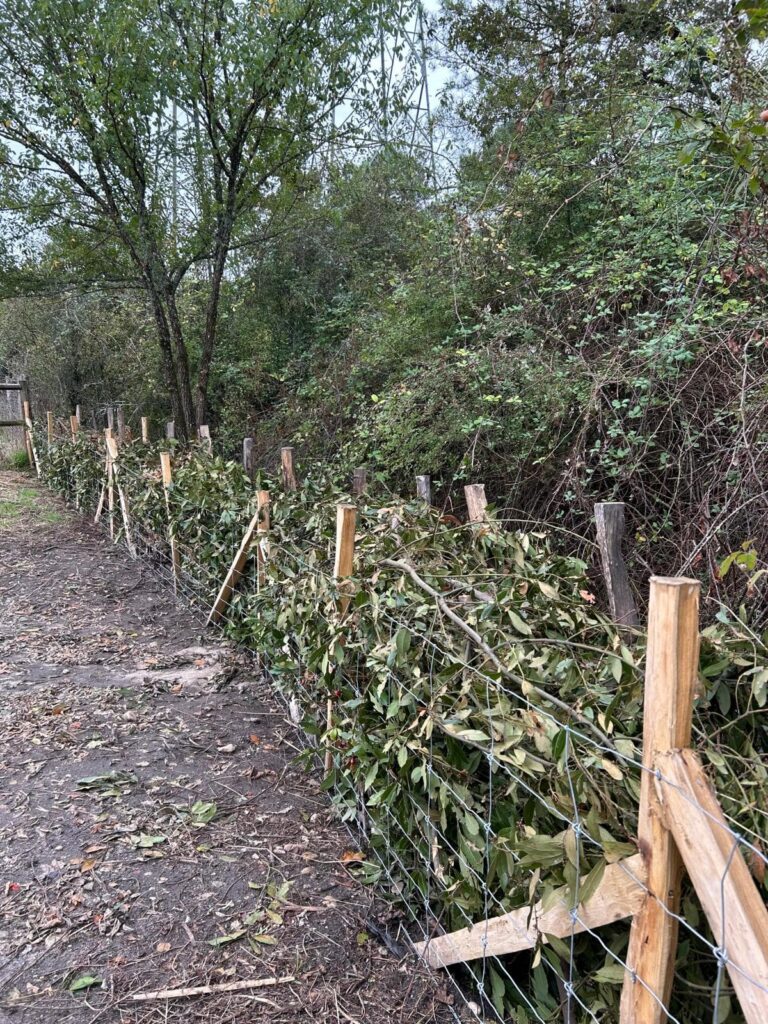
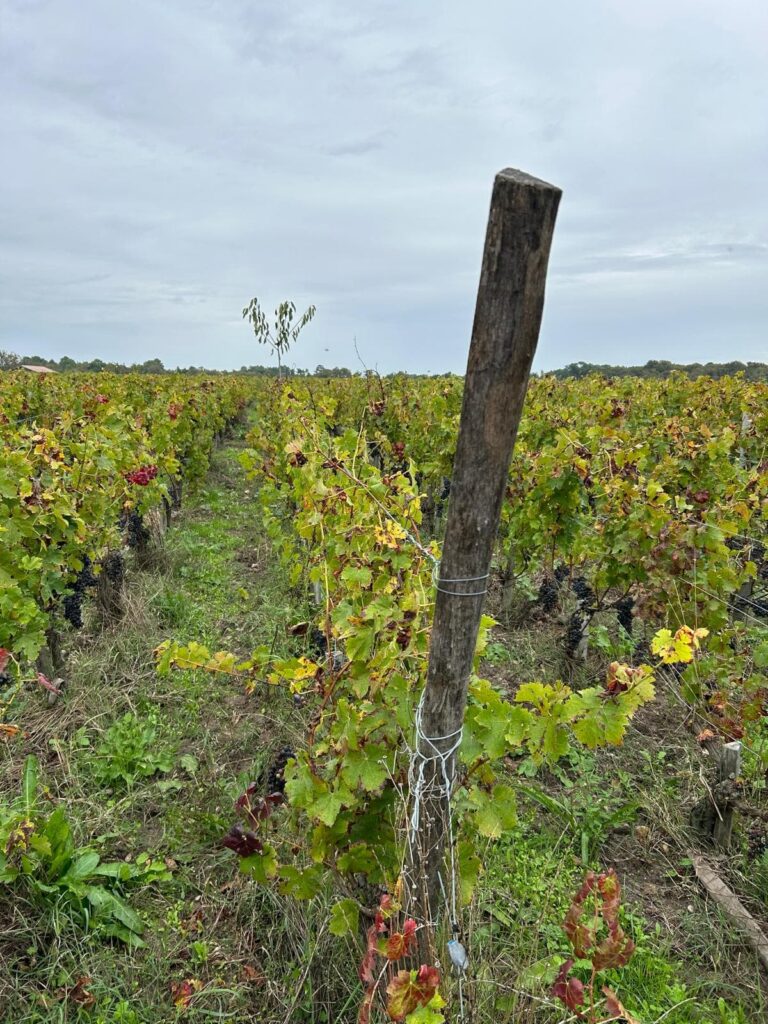
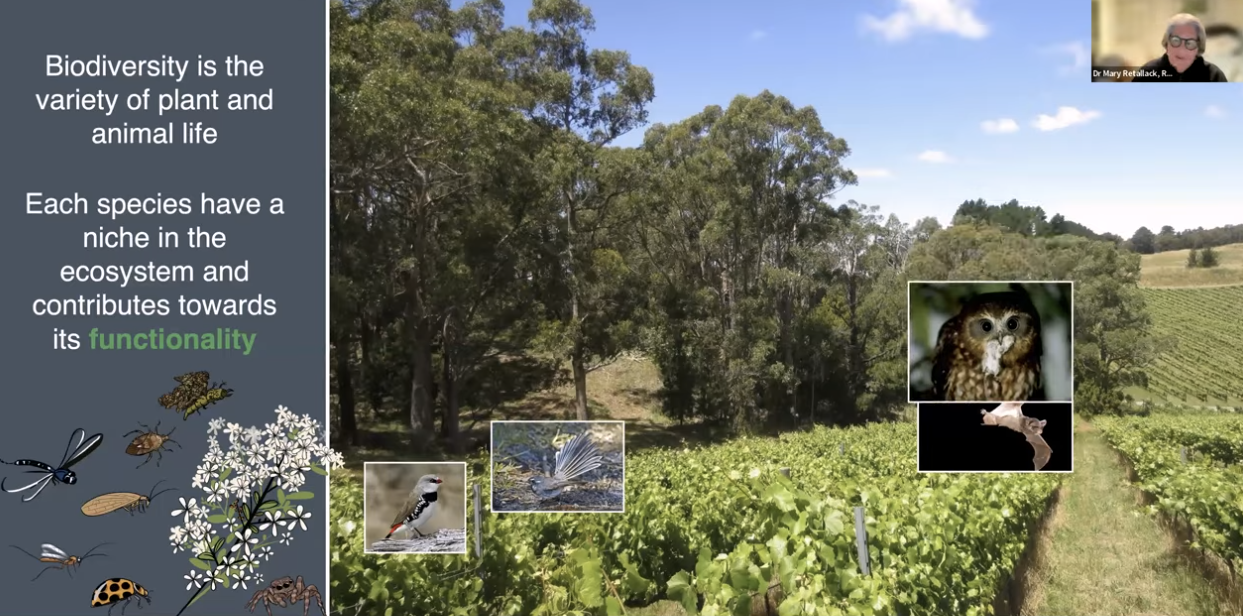
Woodlands surround the vineyards and prunings from the vegetable gardens are used in fencing to provide habitat for biodiversity. A programme of tree planting in the vines is in its early stages of development. Fruit and almond trees have been planted to replace individual vines along the vine rows, approximately every 10th row. Bordeaux canopies are relatively low and tractors straddle the rows. Therefore the end posts of these rows are taller so that the tractor drivers know which rows to avoid driving down.
What’s the impact of these trees on soil health and yields? This is yet to be seen as the trees are young…
Wine Quality
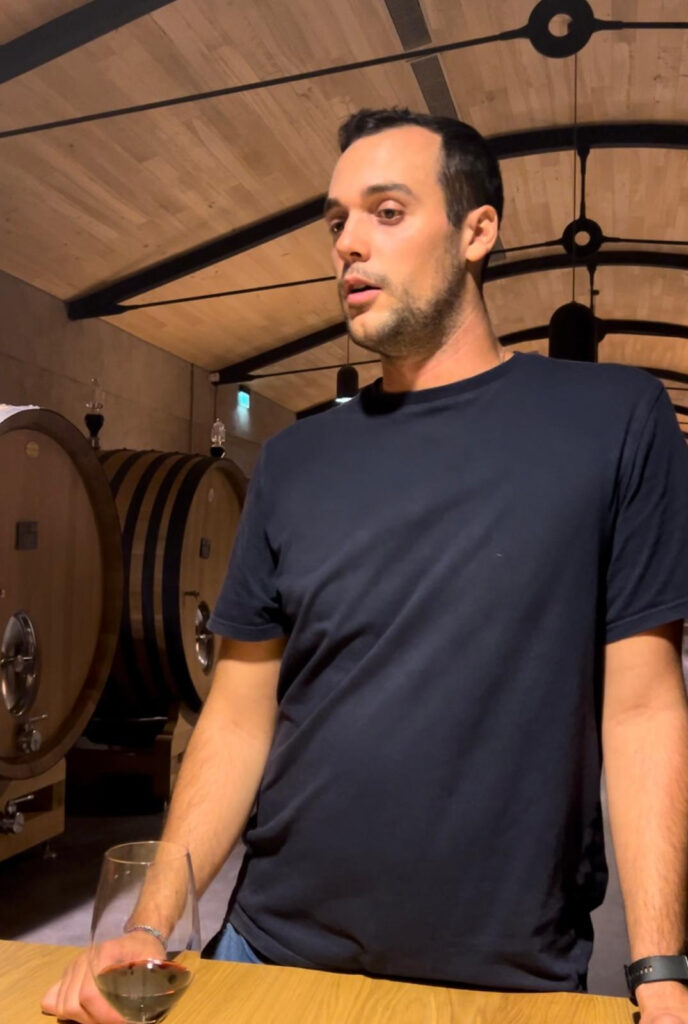
Of course we were excited when Ines showed us the stunning winery with its strong eco credentials. And we were also excited to try the wines. But one of the things we were most excited to find out is whether there had been an improvement in wine quality following these regenerative interventions? Not according to Federico Coltorti, Head of Research & Development in Viticulture. Of course this was initially slightly deflating, until he elaborated: “No, you’ve got it wrong, the wine quality is exactly the same. If we can still make the same wine quality using regenerative viticulture, that is perfect”. Aha! It’s ok, we are on the right track…
“The wine quality is exactly the same. If we can still make the same wine quality using regenerative viticulture, that is perfect”
Federico Coltorti, Head of Research & Development in Viticulture
There is one thing they all really wanted to make clear: they don’t have all the answers but are trying to do the right thing.
Justin – is there anything to add from talking to Federico at the end? I went off to get Laura’s stuff out of my car
Your support helps us equip growers, producers, and the broader wine community with the knowledge, tools, and connections needed to adopt regenerative practices that restore the land and secure the future of viticulture.